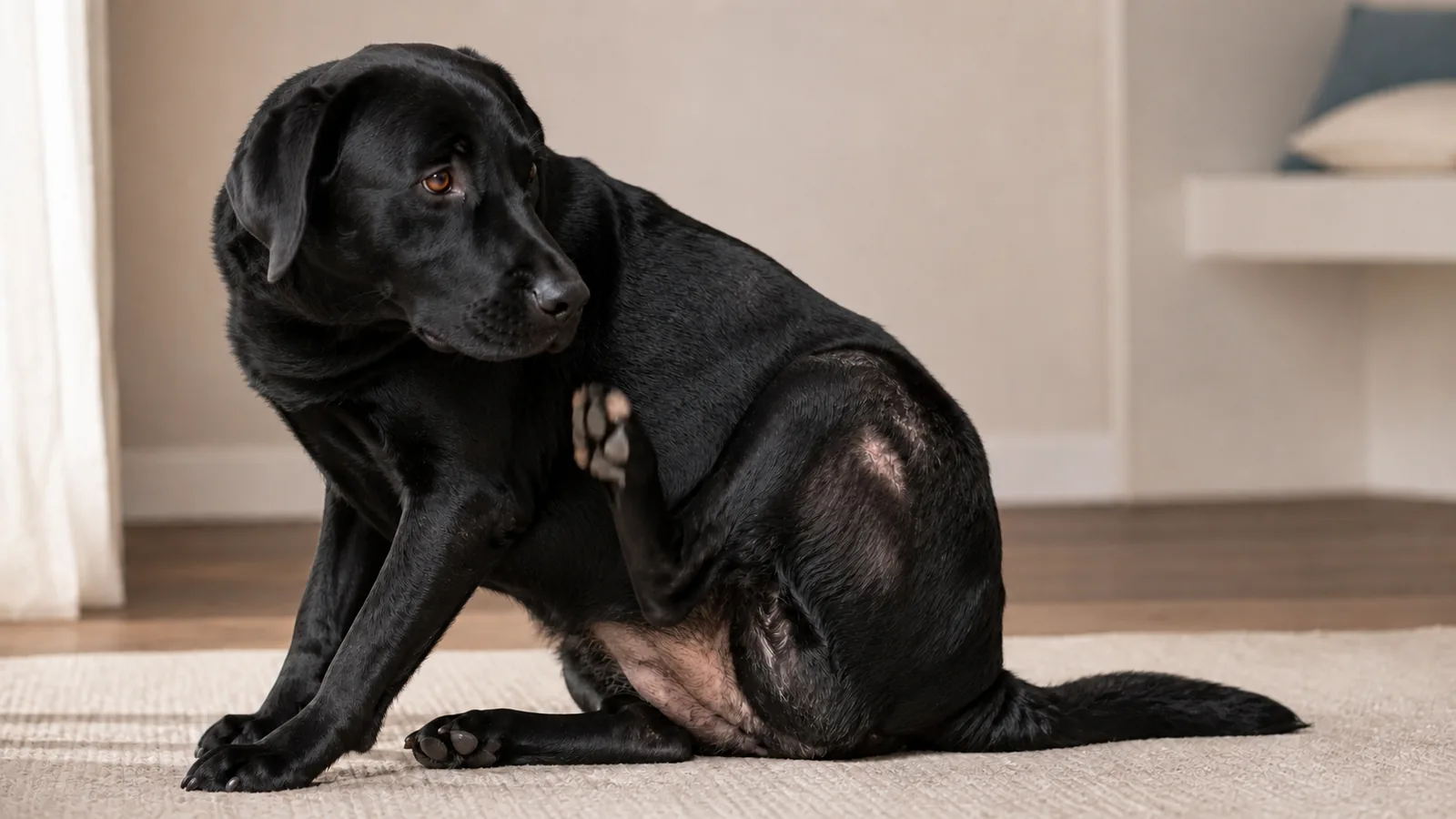
The skin underneath a thinning coat or a spreading bald patch is what tells you whether your pet needs a vet. Redness, scale, crusting, a greasy or yeasty odor, sores from scratching, or areas that have turned thick and dark usually mean an allergy, a parasite, or an infection is active. In dogs, hair loss over calm, normal-looking skin often points to a hormone condition such as hypothyroidism or Cushing's disease, which thins the coat evenly on both sides of the body. In cats, that same bare but healthy-looking skin is more often fur licked off during grooming you never see, usually driven by fleas, allergies, or pain. Some pets have genetically-linked hair loss. Nearly all of these causes are treatable, and most pets grow their coat back once the right one is found.
Spring Branch Veterinary Hospital sits in the Hill Country, where mild winters keep fleas and ticks going year round, so parasites stay near the top of our list when a dog or cat comes in losing hair. Longer appointments give us room to go over the whole coat, take the skin samples needed to sort out mites and infection, and run the lab work that separates a hormone problem from an allergy. For pets with hot spots, lick granulomas, or skin rubbed raw from scratching, laser therapy can calm the inflammation while the cause is treated. If a bald patch is spreading, or the area around it looks red and sore, book a skin exam and we will find the reason.
Reading the Skin Under a Bald Spot
- The skin under the missing fur narrows the list far faster than the size or shape of the bald patch does.
- Itchy thinning over red, scaly, crusted, or smelly skin usually traces back to allergies, parasites, or an infection that moved in behind them.
- Smooth, symmetrical thinning over comfortable skin with no scratching moves hormones to the top of the list, especially in middle-aged dogs.
- Most pets regrow a full coat once the cause is treated, though a few inherited conditions are managed for life instead of cured.
Is This Normal Shedding or Something Worth a Look?
Normal shedding is even, spread across the whole body, and leaves healthy skin behind. Hair loss worth an appointment shows up as a bald patch, thinning that follows a pattern, stubble where full fur used to be, or skin that has turned pink, flaky, or dark. Fur that never fills back in counts too.
Alopecia is simply the medical term for hair loss, and it's a symptom rather than a diagnosis, which is why the same bald patch can point back to a dozen very different problems. Skin and coat also get a hands-on check at annual wellness exams, which matters because early thinning hides well on a dark-coated dog or a cat who grooms in another room.
| What you see | Where it usually points | Most common in |
| Even thinning, healthy skin, seasonal timing | Normal shedding | Dogs and cats |
| Red, scaly, crusty, or smelly skin | Allergies, parasites, or infection | Dogs, and cats too |
| Symmetrical thinning on both flanks, no itch | Hormonal disease | Middle-aged dogs |
| Smooth bare patches over normal skin | Overgrooming from stress or pain | Cats |
| Circular scaly spots that spread | Ringworm | Puppies and kittens |
Why Is My Dog Scratching Their Coat Off?
Allergies are the single most common reason a dog scratches, licks, and chews fur away. A dog's immune system overreacts to something harmless, the skin inflames, and the itching that follows does the real damage.
Atopic dermatitis, the inherited tendency to overreact to pollen, dust mites, and mold, settles on the paws, face, ears, armpits, and belly, exactly the spots a dog can reach with a tongue or a hind foot. Cats show the same problem differently, with crusty bumps along the spine, bare strips down the belly and inner thighs, or thinning that seems to appear overnight because the grooming behind it happened at 2 a.m.
Flea allergy gets ruled out first around here. Mild Hill Country winters keep flea populations running all year, and in a truly allergic pet, one bite can set off two weeks of chewing over the rump and tail base. Food allergies are less common than the internet suggests, though they're real, and they itch year round instead of seasonally.
Long-term control usually stacks several tools: prevention that never lapses, medicated baths, omega-3 supplementation, an anti-itch medication, and sometimes a strict diet trial or allergy testing. If you reach for an over-the-counter antihistamine in the meantime, never give a combination product, because the decongestants and pain relievers blended into allergy and cold formulas are dangerous for dogs and cats. When the itch keeps circling back, the next step is an allergy workup rather than another round of the same shampoo.
What If I Can't See Any Fleas on My Pet?
Not seeing fleas doesn't clear them, and several skin parasites are too small to spot without a microscope. Mites live down inside the follicle or burrow beneath the surface, and bacteria and yeast pile on once the skin is irritated. Small samples sort this out.
- Mites: Nearly every dog carries a few Demodex mites in their hair follicles without a single symptom, but when that population overgrows, the result is patchy hair loss that usually starts around the eyes and muzzle of a young dog. Sarcoptic mange is the opposite story: a burrowing mite that causes frantic itching at the ear margins, elbows, and belly, and it spreads readily to housemates.
- Fleas: Chewing and scratching break hair off directly, and heavy infestations can make puppies and kittens anemic. Year-round parasite prevention takes most flea problems off the table before they start.
- Bacteria and yeast: Staphylococcus overgrows on irritated skin, leaving small pustules and round flaking rings where fur has slipped out. Malassezia yeast brings the greasy feel and musty smell families often describe as corn chips, plus skin that thickens and darkens.
- Ringworm: Despite the name, ringworm is a fungal infection rather than a parasite, and the circular scaly bald patches it leaves behind move easily between pets and onto human skin. Kittens are the classic patients.
Skin that turns suddenly hot, swollen, and painful or a sore that's widening by the hour shouldn't wait for the next routine opening. We handle urgent care during our regular hours, and once we've closed for the evening, the nearest veterinary emergency hospital is the right call.
What Causes Hair Loss When My Pet Isn't Itchy?
Fur that thins evenly on both sides of the body over calm, comfortable skin points toward a hormone problem rather than a skin problem. Thyroid, adrenal, and reproductive hormones all set the pace of the hair growth cycle. The shift creeps in so gradually that many families first notice it in old photos.
Could a Thyroid or Adrenal Problem Be Behind It?
Hypothyroidism slows the hair growth cycle to a crawl, so a middle-aged dog shows up with a dull, thinning coat along the flanks and tail, weight gain that a diet change doesn't budge, and a brand new preference for the warmest spot in the house. Older cats have their own version: hyperthyroidism leaves the coat patchy and unkempt alongside weight loss, a big appetite, and a voice that carries at 3 a.m.
Cushing's disease presents differently, with excess cortisol thinning the skin and coat across the trunk while the belly droops, the appetite grows bottomless, and the water bowl empties two or three times a day. Blood work points toward one or the other, and an abdominal ultrasound shows the adrenal glands themselves when the numbers call for it.
Hormone shifts turn up in the blood long before the coat looks different, so values collected during routine screening while your pet feels fine give us something to compare against when a small drift starts.
Can Sex Hormones or a Medication in the House Be Involved?
An intact male dog with a testicular tumor can end up making enough estrogen to strip hair symmetrically from the flanks and rear, and neutering often brings the coat back within a few months. Intact females can show similar symmetrical thinning that tracks with their heat cycles, and spaying usually settles it.
One cause hides in your own bathroom cabinet. Pets absorb hormones from topical creams, gels, and patches through skin contact or by licking the application site, and the result can be hair loss, a swollen vulva, or enlarged nipples. Cover the spot, let the product dry fully before your pet climbs into your lap, and tell us what's in the house.
Is My Dog's Breed Prone to Losing Hair?
A handful of coat conditions are inherited, and while they can't be cured, they can be managed comfortably for years. Knowing what a breed tends toward keeps everyone from chasing a fix that doesn't exist. These are diagnoses of exclusion, so the common causes come off the table first.
- Color dilution alopecia: Blue Dobermans, silver Labradors, and blue Great Danes carry diluted hair shafts that are structurally fragile and snap off over the first few years of life.
- Seasonal flank alopecia: Boxers, Bulldogs, and Airedales can develop neat, symmetrical flank patches that appear and refill on their own as daylight hours change.
- Sebaceous adenitis: Standard Poodles, Akitas, and Samoyeds are the usual patients when inflammation destroys the oil glands, leaving a brittle coat with silvery scale packed around the hair shafts.
- Alopecia X: Pomeranians, Keeshonds, Chow Chows, and other plush-coated breeds can lose the fluffy outer coat across the trunk and tail while the head and front legs stay fully furred, often with skin that darkens where the coat has thinned. The look is dramatic, but the condition is cosmetic for most dogs, and melatonin brings some coats partway back.
- Zinc-responsive dermatosis: Huskies and Malamutes can struggle to absorb zinc, which shows up as crusting around the eyes, muzzle, and footpads and improves with supplementation and a diet adjustment.
Management leans on supportive skin care, targeted nutrition, medicated bathing, and in some cases melatonin, rather than on a cure.
Why Would a Cat Lick a Patch of Fur Right Off?
Overgrooming is both a self-soothing habit and a pain signal, and it happens where nobody is watching. A cat who licks a strip of belly or inner thigh bare may be responding to a stressful change at home, or to something that hurts underneath. From the outside, those two look identical.
With psychogenic alopecia, the skin under a cat's bare belly or inner thighs looks completely normal and the hair is broken off at stubble length rather than missing at the root, because the damage is coming from a tongue instead of a disease. The triggers are rarely dramatic: a new pet, a move, construction next door, a rearranged litter box, or a neighborhood tomcat parked outside the window.
Pain drives the same behavior and gets missed constantly. Idiopathic cystitis sends a cat straight to the belly, and sore hips, knees, or elbows send both species to the skin directly over the joint, even when that area looks perfect. Dogs run their own version, licking one wrist or ankle until the tissue thickens into a lick granuloma. A frightened cat tells us very little on the exam table, so Fear Free handling is part of how we get an honest response when we press on those joints.
Can Food or Bath Time Make the Coat Worse?
Both diet and bathing show up in the coat. Growing hair demands protein, fatty acids, zinc, and biotin every day, and skin is where a shortfall becomes visible first. Washing too often, or with a shampoo formulated for people, strips the oils that keep hair flexible.
Omega fatty acids keep that barrier working, and a dull, dry, flaking coat is often the first sign they're missing. Complete, balanced commercial diets cover the basics, so the gaps we find usually come from homemade recipes or a digestive problem blocking absorption. Before switching foods to fix a coat, ask us about a food change, since a swap mid-workup can muddy a diet trial you may need later.
Regular grooming does far more than manage shedding, since brushing pulls out loose undercoat, carries natural oils along each hair shaft, and hands you a weekly chance to find a scab, a flea, or a thinning patch while it's still small. Medicated shampoos treat yeast and bacterial overgrowth well, they just need contact time on the skin and a thorough rinse.
What Happens During a Skin and Coat Workup?
We map exactly where fur is missing, study the skin underneath, and collect a few small samples right in the room. In-house testing turns a long roster of possible causes into one or two worth chasing.
Our veterinary team will want to know when the thinning started, whether it follows a season, what everyone in the house eats, and whether any other animals or people are itchy. From there, the pattern on the body guides which tests come first.
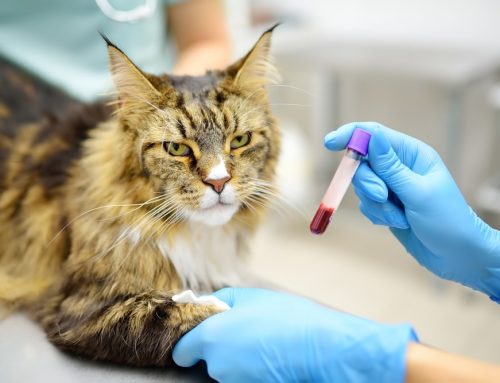
Skin cytology takes a tape or slide impression of the surface and, minutes later under the microscope, shows whether bacteria, yeast, or inflammatory cells are behind the irritation. A skin scraping digs deeper to find mites. A fungal culture confirms ringworm, though that one grows on its own schedule and takes patience. Blood work with a thyroid or adrenal panel comes next when the picture is symmetrical and non-itchy, and food allergy gets sorted through a strict elimination diet trial that runs a couple of months and only works if nothing else goes in the mouth.
How Do We Treat Hair Loss Once We Know the Cause?
Treatment follows the diagnosis, so there's no single protocol for a bald patch. Parasites get targeted medication, infections get an antibiotic or antifungal, allergies get a long-term itch plan, and hormonal disease gets treated at the source.
| Cause | What treatment usually involves | Coat outlook |
| Allergies | Strict flea control, an anti-itch medication, medicated baths, omega-3s, sometimes a diet trial | Itching settles first, hair follows |
| Mites and fleas | Prescription parasiticides, treating housemates, cleaning bedding | Regrowth once the population is gone |
| Bacterial or yeast infection | Antibiotics or antifungals plus a medicated shampoo | Skin calms, then fur returns |
| Hormonal disease | Thyroid medication, cortisol-lowering therapy, or spay and neuter | Slower, often two to four months |
| Stress or pain | Environmental changes, pain control, treating the source | Fur fills in as the trigger resolves |
| Inherited coat conditions | Skin care, nutrition, medicated bathing | Managed rather than cured |
A recheck confirms hair is filling in, gives us room to adjust a dose that's slightly off, and catches a secondary infection while it's still minor. When the licking traces back to a sore joint, therapeutic laser is one of the tools we use on that pain, so your pet has less reason to chew.
Hair Loss Questions Pet Families Ask Us Most
Will my pet's hair grow back?
Most of the time, yes. Once the mite, the infection, the allergy, or the hormone imbalance is handled, follicles that went dormant start producing again, usually over four to twelve weeks. New growth often comes in a different shade or texture at first and evens out later. The exceptions are follicles lost to deep scarring and a few inherited conditions, where the goal shifts from regrowth to keeping skin comfortable.
Can I catch anything from my pet's skin problem?
A few causes do cross species. Ringworm spreads to people through direct contact and shared bedding, sarcoptic mange can leave an itchy rash on arms and waistlines, and fleas will bite anyone in the house. Allergies, thyroid disease, Cushing's, and breed-related coat conditions carry no risk to you at all. Wash your hands after handling crusty skin, run pet bedding through hot water, and mention it to your physician if a rash appears.
My pet has one bald spot. Can I just watch it?
A single small patch on a comfortable pet can be watched for about a week, with two cautions. Never apply human creams, ointments, or essential oils, since several are toxic to cats and most make cytology harder to read. Don't shave the area either, because clipping changes what we can see. If the spot widens, a second one appears, or the skin turns red and sore, give us a call.
You Don't Have to Sort Out Your Pet's Coat Alone
Hair loss gets more worrying the longer it goes unexplained. Nearly every cause on this list has a treatment behind it, and most pets look like themselves again within a couple of months of starting the right one. These appointments get real time at Spring Branch Veterinary Hospital, because the answer usually sits in the small details a rushed exam skips. If a patch is spreading, or the skin underneath has turned red and sore, schedule a visit and we'll find the reason together.