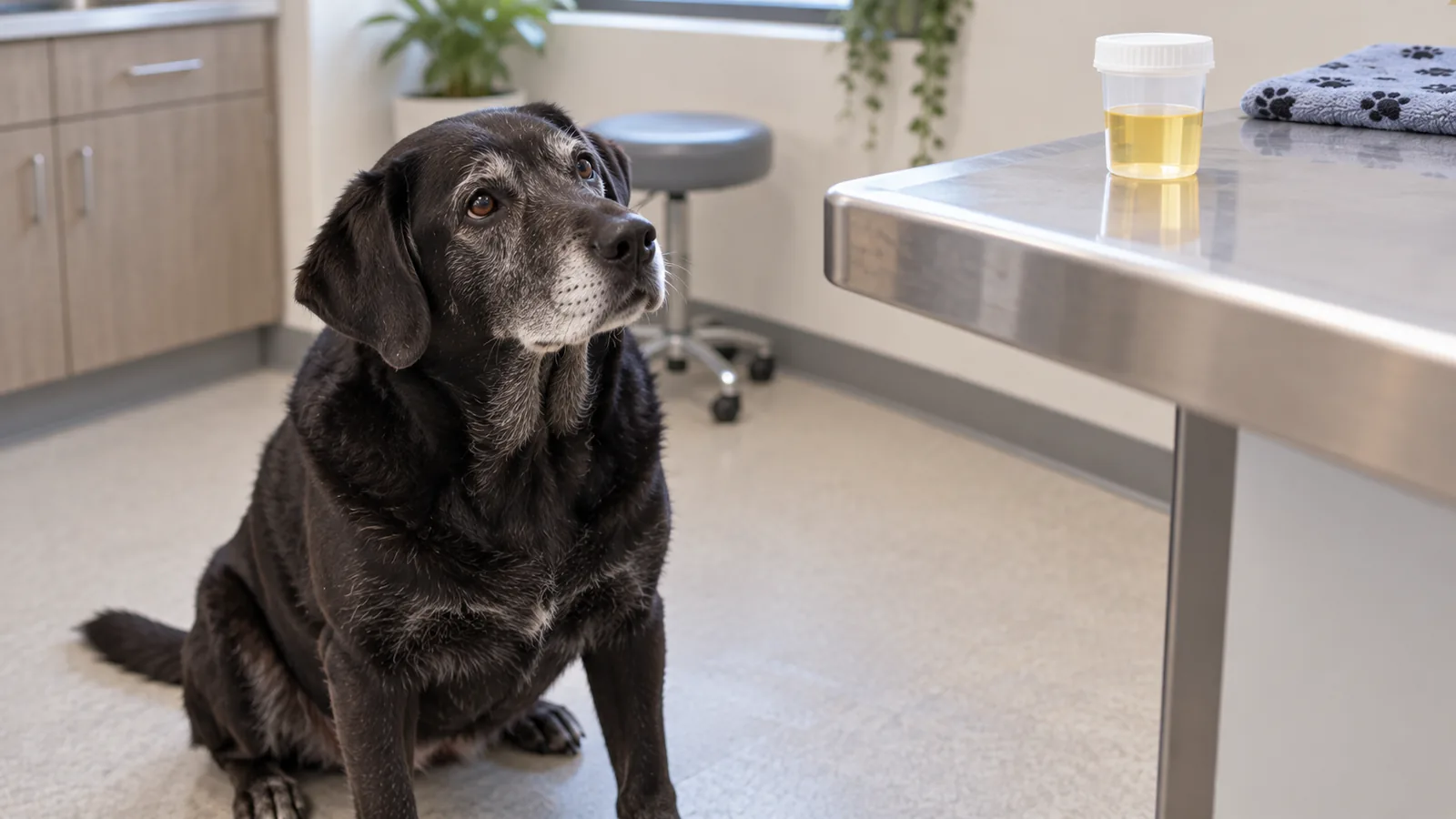
It is fair to ask whether senior screening is worth paying for when your dog or cat seems fine, and for most pets it is the cheaper path, because the diseases it looks for cost far less to manage early than to treat in a crisis. Early kidney disease can often be slowed with a diet change, and high blood pressure is usually controlled with a daily pill. Found late, those same problems mean hospital stays, emergency visits, and sometimes damage that cannot be reversed at any price. Some slowing down is simply age, but new thirst, a thinner frame, or a reluctance to jump can be the first sign of something treatable that bloodwork, a blood pressure check, and X-rays would catch before you noticed.
Spring Branch Veterinary Hospital books longer appointments on purpose, so a senior visit has room to talk through what each test would tell us about your pet and whether it is worth running, with no corporate checklist behind the recommendation. We run bloodwork and urine testing as part of wellness care, and our digital X-rays are reviewed by a board-certified radiologist as well as by our own veterinarians, so a heart or a spine that is starting to change gets a second expert look. As a Fear Free certified hospital in Spring Branch, Texas, we also work to keep your pet calm through the visit, which matters more than it sounds, since a stressed pet's blood pressure can read high when it is not. When you want to know what a senior screening would look like for your dog or cat, ask us your questions and we will map it out with you.
What We're Looking For in an Older Pet
- Dogs reach senior status around age seven, giant breeds sooner, while most cats cross that line closer to ten or eleven.
- Beyond the hands-on exam, expect a blood draw, a urine check, a blood pressure cuff on a leg, and X-rays or ultrasound when the exam or the numbers call for them.
- Kidney disease, thyroid disease, high blood pressure, heart disease, and cancer all begin in silence. A test picks them up long before anyone at home could.
- Last year's results are the most useful thing on the page. Only the comparison shows a value drifting from the low end of normal toward the high end.
What Does a Senior Visit Cover That a Regular Checkup Can't?
A standard checkup finds what hands and eyes can find: a heart murmur, a new lump, sore hips, tartar on the back teeth. A senior visit adds the internal picture, because the organs that fail most often in older pets give away almost nothing on the outside until they're well along.
A dog or cat who looked healthy last spring can be well into kidney or thyroid disease by fall. That speed is the reason preventive testing stops being optional once a pet crosses into the senior years, earlier for a Great Dane than for a Chihuahua.
That's the case for two wellness visits a year instead of one: two weights, two body condition scores, and two chances to catch the half pound hiding under a thick coat.
What's Included in a Senior Screening Panel?
Senior pet care recommendations start from a baseline of blood work, a urinalysis, and a pressure reading, then add imaging when the exam points that direction. Not every older pet needs every test at every visit, and geriatric care works better built around one animal than a template: a twelve-year-old cat who has lost half a pound needs a different plan than a thriving nine-year-old Lab.
What Can Blood Work Find Before a Senior Pet Seems Sick?
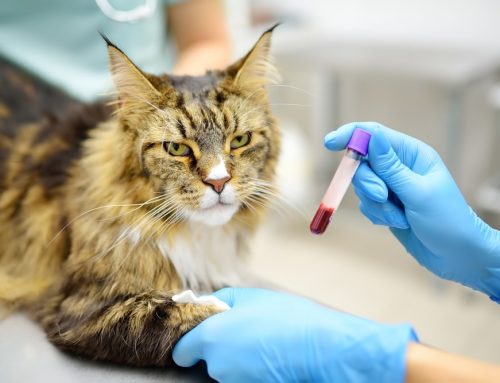
Blood work finds what an older pet is not showing yet. One blood draw covers anemia, early hints of kidney trouble, liver enzymes on the move, a thyroid running fast or slow, and inflammation the body has been managing quietly. Your dog still bounds out to the truck; your cat still yells for breakfast. Neither can tell you any of it.
| Test | What the sample measures | The early warning it gives |
| Thyroid testing (T4) | How much hormone the thyroid gland is putting out | A sluggish gland in a dog, a racing one in a cat |
| Chemistry panel | Glucose (blood sugar), electrolytes, protein, and the markers of kidney and liver function | Diabetes, dehydration, kidney disease, liver disease |
| Heartworm and tick-borne screen | Antigen from adult heartworms and antibodies to tick-borne bacteria | Heartworm disease and exposure to Lyme, Ehrlichia, and Anaplasma |
| Complete blood count (CBC) | Red cells, white cells, and platelets | Anemia, an infection nobody knew about, inflammation, a few cancers |
Our veterinarians choose the test based on the individual pet and their risk factors, and compare the results to previous years to find subtle trends that might otherwise be missed.
Why Would a Dog or Cat Who Feels Fine Need a Blood Pressure Check?
A dog or cat who feels fine needs a blood pressure check because the damage happens silently, with no headaches or dizzy spells to tip you off. The call we dread starts with a cat who was fine yesterday and is walking into furniture this morning: a detached retina, and behind it hypertension that had been leaning on her kidneys, heart, and brain for months. A cuff reading is the only way to catch it first.
A high number is rarely the whole story. In both species the pressure is usually pushed up by another disease: chronic kidney disease most often, then an overactive thyroid in cats, diabetes, and certain adrenal disorders. Finding the pressure means going looking for the cause.
The measurement is simple: a small inflatable cuff on a leg or tail, a few minutes of quiet, and several readings averaged rather than one grabbed as a cat comes out of the carrier. Fear Free handling is doing real medical work in that moment, not just being kind. Treatment for a genuinely high number is usually a daily medication, amlodipine for most cats and an ACE inhibitor or telmisartan for dogs, alongside treatment of whatever started it. Vision already lost may not return, though eyes that still work usually keep working once the pressure is controlled.
Why Do We Want a Urine Sample Too?
We want a urine sample because a blood value on its own can mislead. Say your dog's kidney number comes back a hair above the line. Paired with nicely concentrated urine, that may mean nothing more than a dog who skipped the water bowl. Paired with watery urine, the identical number is a different conversation. That is the sample's main job: it shows how well the kidneys concentrate, an ability they lose before any blood value moves. Dilute urine and protein where it doesn't belong are the reason urinalysis is the earliest warning available for kidney damage.
It answers other questions on the way past. Sugar points toward diabetes. White cells and bacteria mean a urinary tract infection, which older dogs and cats carry more often than you would expect, sometimes with no straining and no accidents on the rug. Crystals, blood, and odd-looking cells fill in the bladder's own picture.
How Do We Check an Older Pet's Heart?
We check an older pet's heart with a stethoscope first, then with whatever the murmur makes us ask next. Answering that question usually takes two or three tools together, since heart disease diagnosis rarely rests on one test. A chest X-ray tells us whether the heart has outgrown its normal outline and whether fluid is gathering in the lungs. An ECG reads the rhythm. An NT-proBNP blood test measures strain on the heart muscle. An echocardiogram, the ultrasound of the heart, lets a cardiologist watch the valves open and close and the chambers fill and empty as it happens.
Cats make this harder. Plenty of cats with serious cardiac disease never develop a murmur anyone can hear, and the blood test earns its spot in the workup for that reason. We run chest radiographs and an ECG on site. An echocardiogram may be able to be done in our hospital with our mobile ultrasound specialist, or we may refer you to a cardiologist; the decision is made based on your pet’s symptoms and other testing results.
Some things shouldn't wait for the next scheduled visit:
- Breathing that changes: fast, heavy, or open-mouth breathing in a cat needs to be seen right away.
- Fainting or collapse: a dog who drops and comes right back around usually has a rhythm problem, not a clumsy moment.
- A cough that won't quit: a soft, repeated cough at night in a small-breed dog is worth a call rather than a wait-and-see week.
We handle emergency care during our regular hours here in Spring Branch, so call first if you can and come straight in if you can't.
When Do X-Rays or an Ultrasound Get Added to the Plan?
Imaging is the next step when the exam or the blood work raises a question that numbers alone can't settle. Radiography maps the whole outline in a matter of minutes: organ size and shape, spinal and joint changes, bladder stones, and masses big enough to push aside what sits around them.
| X-rays | Ultrasound | |
| Strong suit | Bone, the chest, and how big things are and where they sit | The inside of an organ, one layer at a time |
| What we find in seniors | Worn hips and spines, an enlarged heart, bladder stones, lung patterns | Changed kidney and liver texture, swollen adrenals, small masses, free fluid |
| From your pet's side | Holding still for a few seconds, sometimes needing sedation | A shaved patch on the belly, warm gel, and a padded trough |
Unexplained weight loss on a clean chemistry panel, a belly that feels fuller than it should, or an older cat vomiting more than a hairball explains all points toward imaging as a next step. Our in-house X-rays and a visiting specialist's detailed ultrasound keep most senior imaging right here instead of at a second appointment across the county. When ultrasound finds something questionable inside an organ, a small needle sample is often the next move.
Which Age-Related Conditions Does Screening Catch Most Often?
Senior screening turns up the same handful of problems over and over, and nearly all of them get easier to manage the earlier we find them.
An underactive thyroid in dogs. Weight gain on the same food, a coat thinning along the flanks, and a dog who sleeps through things she used to join all point toward hypothyroidism, which a blood test confirms and an inexpensive daily pill treats. It reads exactly like ordinary aging, and that resemblance keeps the hormone on the senior panel.
An overactive thyroid in cats. A cat eating everything in sight and still losing weight is the classic picture of hyperthyroidism, treatable with daily medication, a prescription diet, surgery, or radioactive iodine that resolves it outright. Restlessness, yowling at three in the morning, and a scruffy coat often travel with it. Radioiodine happens at a licensed facility, and we arrange that referral.
Chronic kidney disease. By the time increased drinking and urination are obvious at home, roughly two thirds of kidney function is already gone. That math is the whole argument for catching chronic kidney disease on a screening panel rather than at the point of symptoms. The day-to-day work afterward is quiet: a therapeutic diet, water bowls within easy reach, phosphate control, medication for nausea or protein loss, and rechecks on a schedule. None of it is dramatic, and all of it buys time. Never limit water to cut down on accidents, because a pet losing water through failing kidneys dehydrates fast, and pets who get behind can catch back up on IV fluids here.
Heart disease. Degenerative mitral valve disease is the common one in small-breed dogs, larger breeds lean toward dilated cardiomyopathy, and cats tend toward hypertrophic cardiomyopathy. Caught before the coughing and labored breathing start, medication holds things steady for a long time, and plenty of these pets live years past diagnosis.
Cancer. Lumps that change size or texture, unexplained weight loss, sores that won't heal, and new lameness are the everyday warning signs of cancer, and a fine needle aspirate is usually the fastest way to learn what a mass is made of. Golden Retrievers, Boxers, and Bernese Mountain Dogs carry more risk than most. Many growths turn out to be fatty and harmless, but "let's keep an eye on it" is a fair plan only once we know what we're watching.
Liver disease. Enzyme changes on a chemistry panel almost always come first, well ahead of yellow gums, vomiting, or a belly filling with fluid. Some causes respond to treatment and others are managed long term. The usual next step is an ultrasound to see whether the whole organ is involved or one area.
Arthritis and joint pain. Dogs get slower on the stairs; cats quit jumping to the counter and start stepping over the litter box edge instead of into it. Weight control, monthly injectable pain control, and joint supplements each take a piece of the load off a sore joint, and most senior pets do best with several working at once. Laser therapy adds another layer of relief for stiff hips and backs, and radiographs tell us which joints we are treating. Keep your own medicine cabinet out of it: ibuprofen and acetaminophen are both poisonous to dogs and cats, and acetaminophen alone can kill a cat.
Dental disease. Most of what matters in dental care happens below the gumline, where bacteria sit against bone and seed a bloodstream that runs through the heart, liver, and kidneys. A cleaning under anesthesia with scaling, polishing, and dental radiographs is the only way to treat what hides down there. You usually notice the breath first, or a pet chewing on one side and dropping kibble. Daily brushing slows the buildup between visits.
Cognitive decline. Night pacing, staring at walls, and accidents in a pet who was reliable for a decade point toward cognitive dysfunction, which diet, supplements, and medication can slow. Bring it up rather than writing it off as old age.
Your Senior Screening Questions, Answered
My Cat Never Goes Outside. Does She Still Need All of This?
Your indoor cat needs this as much as any other cat, since staying inside protects her from cars, fights, and most infectious disease but does nothing about aging. Kidney disease, an overactive thyroid, high blood pressure, dental infection, and arthritis are just as common in a cat who has never touched grass. A covered litter box also hides the evidence, leaving you no easy way to see how much urine she is producing.
What If Everything Comes Back Normal?
A normal panel on a healthy senior is the result we are hoping for, and it still buys something real. Those numbers become your pet's personal baseline. Next year, a kidney value that has slid toward the high end of normal reads as a trend worth acting on, where on its own it would look unremarkable.
Is My Older Dog Too Old for Anesthesia?
Your older dog is rarely too old for anesthesia, because organ function decides the risk, not the number of birthdays. A healthy twelve-year-old often does better than a sick five-year-old. Pre-anesthetic blood work, a blood pressure reading, and an ECG when the heart raises questions let us shape the protocol to the patient. IV fluids, warming, and continuous monitoring carry seniors through the rest, and skipping a needed dental cleaning usually costs more than the anesthesia risks.
Good Years Ahead for Spring Branch Seniors
Most senior screenings end with good news and a plan to check again in six months. When they don't, they hand us a problem while it is still small enough to fix with a diet, a pill, or a change in routine. If your dog has been slower on the trail this year, or your cat has been camped out by the water bowl, book a senior screening at Spring Branch Veterinary Hospital. If you aren't sure it's time yet, tell us what you're seeing and we'll help you decide.